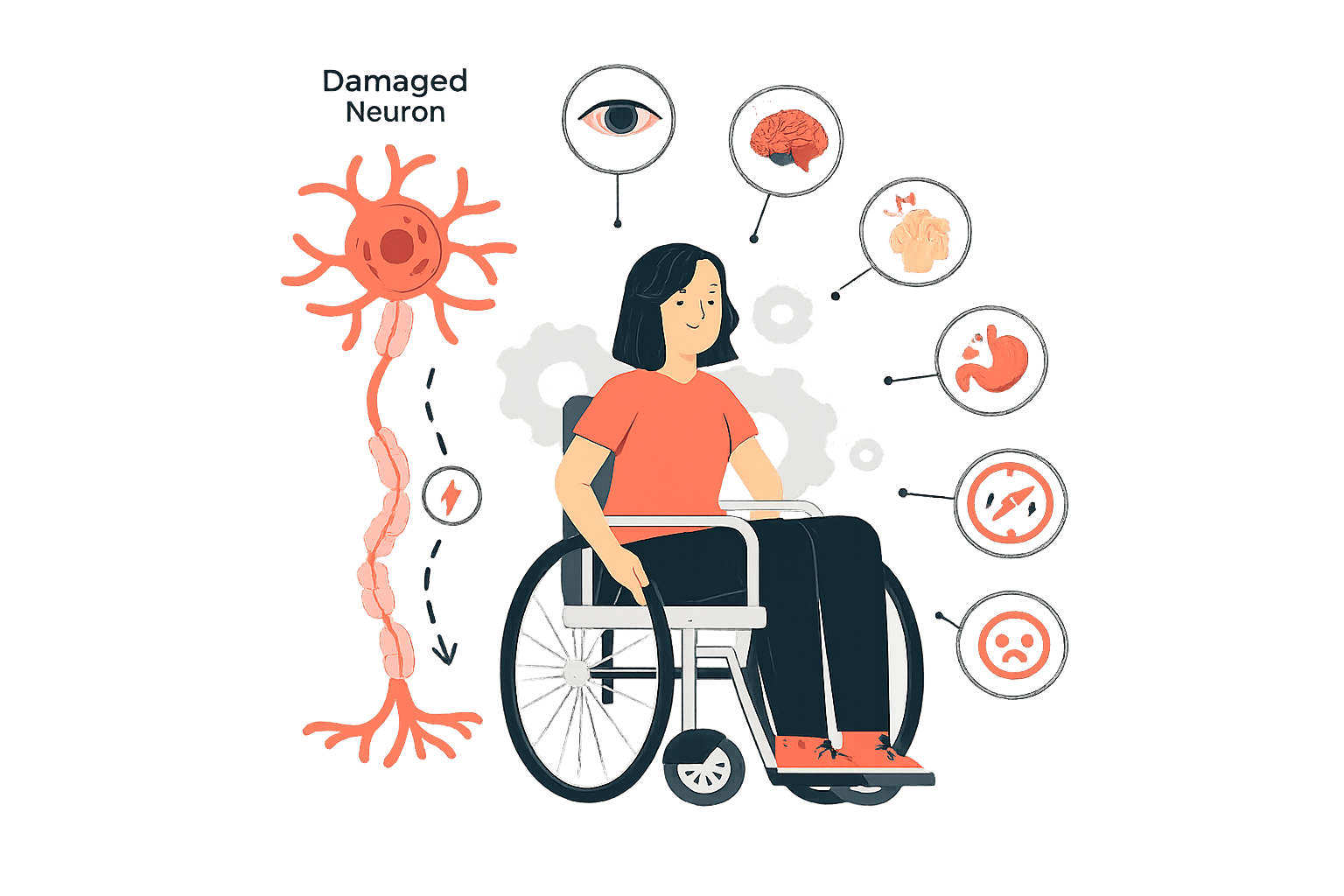
Athma Mind Care Hospital supports individuals dealing with persistent physical symptoms linked to emotional stress. As one of the trusted centres for somatoform disorder treatment in Chennai, our goal is to help patients understand their symptoms, reduce discomfort, and regain daily functioning.
We follow structured somatoform disorder therapy designed to lower anxiety, improve clarity, and build long-term stability.
Somatoform disorder, also called somatic symptom disorder, involves physical symptoms that continue even when medical tests show no specific cause.
At our centre, offering somantic disorder treatment in Chennai, specialists study the link between stress, emotions, and physical sensations.
This helps us design a treatment plan that focuses on both physical relief and emotional balance.
Seek help at our hospital if you notice
Our team provides early somantic symptom disorder diagnosis and treatment to prevent symptoms from turning chronic and to support faster recovery.
A psychiatrist guides patients through understanding their symptoms and the emotional factors behind them. They provide counselling, teach coping methods, and work with families to improve support at home.
Our team helps you to lower your distress, improve resilience, and helps patients handle symptoms more effectively.
Our treatment approach includes:
This structured care model supports individuals seeking reliable somatoform disorder treatment in Chennai.
Our specialist provides therapy, which plays a major role in recovery.
Our programs include:
Consistent somatoform disorder therapy helps patients gain control over symptoms and improve daily functioning.
Rehabilitation focuses on long-term stability and independence. Patients receive:
These services strengthen coping skills and improve quality of life over time.
Early somantic symptom disorder diagnosis and treatment help avoid unnecessary medical tests and reduce the cycle of worry and discomfort. It provides patients with a clear understanding of their condition and speeds recovery.
Misunderstanding often affects individuals dealing with somatoform symptoms.
At Athma Mind Care Hospital, we aim to create awareness and encourage families to approach these symptoms with empathy.
Supportive environments help patients recover faster and with greater confidence.
Athma Mind Care Hospital is committed to helping patients build strength, clarity, and stability. We focus on emotional health, symptom control, and continuous guidance, with compassionate care and structured treatment, we help individuals move toward a balanced and healthier life.
Connect with our expert doctors and therapists today and take the first step toward a calmer, healthier life.
Somatic symptom disorder is a complex illness that calls for consistent and reassuring relationships with confident and supportive healthcare providers. Often at the center is uncertainty and lack of trust in one’s own ability to tell the difference between normal bodily sensations and those that signal harm. It can be very challenging for individuals, family members and healthcare professionals alike to tell if new symptoms relate to a major illness or routine feelings of discomfort.
Further complicating the picture is the fact that often people with the disorder have ongoing chronic illnesses which can change and worsen over time. The art of managing somatic symptom disorders is therefore balancing the need for a prudent medical evaluation with over-diagnosis and over-treatment. This balance can only be achieved through a trusting relationship with a knowledgeable clinician, usually a primary care provider or primary care team.
Family members can assist an individual with somatic symptom disorders with ongoing support and understanding, and encouragement of stable and consistent healthcare relationships. Additionally, family members can help to follow treatment plans that aim to avoid urgent and emergent medical care settings in favor of outpatient appointments with a consistent provider. Family can also assist the person suffering to track and record symptom information for later discussion with his/her provider. Family members can also play a valuable role in reassurance and communication with the person’s healthcare team.
As mentioned above, the name of the game is balancing prudent medical investigations and treatments with over-diagnosis and treatment. The ultimate shared fear of patients and healthcare providers dealing with somatic symptom disorders is that we’ve all gotten it wrong – that we’ve missed a rare disease and caused undue suffering and/or death as a result. Put another way – that we’ve identified something as being “all in their head” when, in fact, they weren’t “making it up”. Experienced clinicians reassure their patients that, though the tests run so far have been normal, it doesn’t necessarily mean that what the patient is experiencing isn’t happening. I frame normal lab tests as reassurance that nothing catastrophic is going on, highlight the number of diagnoses that we’ve “ruled out” as a result and pledge support to continue to work with the patient to improve functionality and monitor symptoms for any change in quality or quantity warranting further investigation.
It’s important to also acknowledge the toll these symptoms can take in loss of functioning, and to express empathy with the shared fear and confusion that inevitably occur with these disorders. Spouses and family members can take the same approach. Avoid direct confrontation about the truthfulness of the symptoms and help the person identify creative and practical solutions and coping strategies that can minimize the problems caused by the symptoms. Recognizing the emotional toll of feeling isolated through this process and encouraging attention to mental health concerns that could be framed as “side effects” of these symptoms may be a segue into more formal mental health treatments. Furthermore, spouses can help through the profession of unconditional love and support.
First – the term hypochondriac is a loaded term that rarely opens doors to quality conversations about what is going on and what problems are supposed to be fixed. Second – and to answer the question – No. Persons with Illness Anxiety Disorder (newer term for ‘hypochondriasis’) do not usually complain of symptoms, but rather express an intense fear of becoming ill. Consequently, they focus on monitoring for the onset of a feared illness, or avoiding exposure to situations which could lead to illness.
Focus on why you’d like her to get help by expressing your concern that you’ve lost a friend to this constant suffering. Avoid the pitfalls of sending an accidental message that it’s all “in her head” by suggesting they see a psychiatrist directly about it. Instead, find out what her needs are and helping her to seek help and guidance within her own framework. When friends and family members are completely non-judgmental with an attitude of acceptance and humility I’ve often found that the person suffering can maintain remarkable insight into the emotional and social connections of their symptoms and fears. As a friend, your role is to be supportive, and your goal should be to get your friendship back, not necessarily fix her. When viewed under this light, offerings of assistance and advice can become more palatable. A clearer, more appropriate end-goal can be established – namely to regain your friendship.
There are many gifts to modern medicine – we know much more today than we could have imagined 100 years ago. We have more advanced tools and lab tests to help us diagnose diseases, and better decision supports to investigate unusual complaints. In spite of this, modern medicine still often falls short of defining and classifying some experiences people have – some of which can be very painful and debilitating. Often, the approach physicians take is to first evaluate for potentially life-threatening conditions, and then work down a list of known options by their clinical severity and relative ease of evaluation (expense and risk of invasiveness). This process can leave a bad taste in the mouth of physicians and patients as sometimes there are no clear answers as to the cause of the pain, and this process can sometimes put doctors at odds with their patients.
It’s important to remember that all pain – even pain that we can see and define – is contextual. A soldier in the heat of battle can suffer enormous tissue damage from a gunshot wound in the arm, and barely feel anything as he rescues his companions from danger. While later in the hospital, alone, tired and scared of what may become of his limb, he can hardly stand a needle prick to obtain a blood sample. Fear, emotion, distraction and the meaning behind an event or feeling can, together, dictate the severity of pain and your reaction to it. Often, it’s the reaction to the pain that engenders more of it. The soldier tenses his forearm and makes it more difficult for the lab tech to draw his blood sample, making the pain worse.
We must also recall that a life without pain is a life without our inborn feedback mechanisms warning us of environmental dangers and potential injury. In essence, we can’t survive without pain. And yet, for some, it can become overwhelming and difficult to manage. It’s always prudent to properly investigate pain symptoms, and it can be difficult for patients with pain to know when they’ve had a proper investigation and when their physician is fully listening to them and acting in their best interest.
Sometimes it’s reasonable to receive a second-opinion to ensure that something’s not being missed. Finding trust in a professional takes time, and you should be transparent in your desire to seek a second opinion if you’re not satisfied with the first. Nevertheless, when multiple opinions are the same, you may find yourself in the very frustrating position of being at the limits of modern medicine to figure out what’s going on. In these cases, I try to focus on managing the pain with my patients, identifying common triggers and related factors that bring it on or make it worse, and improving their lives and their ability to cope with the pain to restore their functioning in the world back. A grieving process can often accompany this approach, as they may have to accept the pain in order to move on with their lives.
Regardless, talk to your doctor about your feelings of the pain, your fear and your sense of helplessness. You may find that they feel the same way. At times, medications can be helpful to alleviate many of the contextual factors making the pain more severe, such as depression or anxiety, and some antidepressant medications can actually work to reduce symptoms of chronic neuropathic pain that can be hard to define. Meeting with a therapist or counselor can help build coping skills and methods to manage the pain so that it no longer creates suffering, and keeping busy with deliberate distractions can help alleviate the loneliness and slowness of time that comes from suffering with chronic pain. Also knowing you’re not alone – millions of Americans also suffer from chronic pain that is ill-defined – can help. Seeking support and comfort from others undergoing similar experiences can help as well.
Ready to take the next step in your mental health journey? Scheduling an appointment with us is easy!
If you are in crisis or need immediate support, our 24/7 emergency counseling service is here for you. Our trained professionals are available around the clock to provide assistance, guidance, and support during difficult times.