Home / About Disorder / Impulse Behavioral Disorders
Athma Mind Care Hospital offers specialised Impulsive behaviour disorder treatment in Chennai, supporting individuals who struggle with sudden reactions, emotional dysregulation, and uncontrolled urges.
As a trusted Impulsive Behaviour Treatment Centre, we focus on restoring behavioural balance through structured therapy, medical care, and long-term guidance.
Our team provides impulsive behaviour treatment for children, teens, adults, and older individuals with personalized care at every stage.
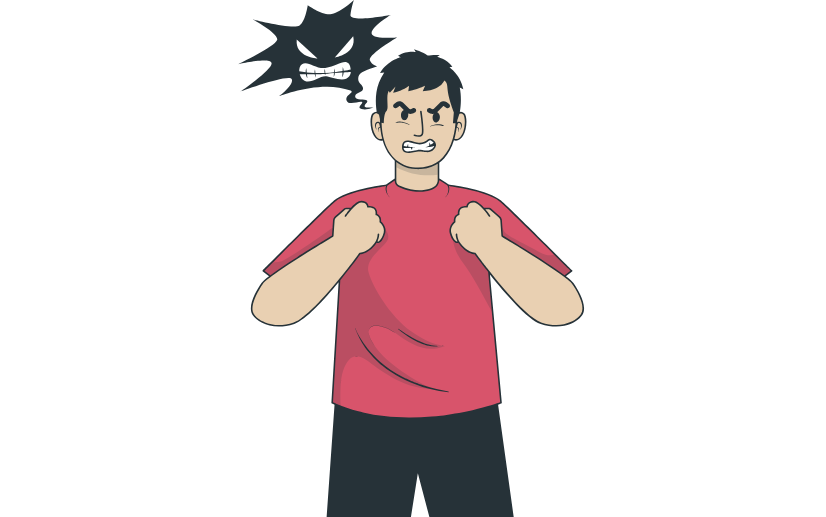
Impulsive behaviour disorder involves difficulty resisting urges or delaying reactions.
People act without considering consequences, which affects relationships, work, and decision-making.
Common impulse control issues include:
At Athma, specialists identify triggers, emotional patterns, and severity levels to design targeted impulse management plans.
You should seek professional support when you notice:
These behaviours improve with structured therapy and early support.
Athma provides focused assessments to diagnose impulse control issues and guide treatment.
At Athma Mind Care Hospital chennai, the treatment process includes:
Detailed Clinical Evaluation
Understanding emotional patterns, behavioural triggers, and personal history.
Personalised Treatment Planning
Custom plans that balance therapy, routine, and behavioural goals.
Therapy and Counselling
Targeted sessions addressing impulse management, anger control, emotional regulation, and decision-making.
Medication Support
Where needed, doctors prescribe impulse medication to reduce compulsive behaviours and stabilize mood.
Rehabilitation and Follow-up
Regular reviews help track improvements and strengthen long-term control.
Lifestyle Integration
Sleep routines, exercise, nutrition, and stress reduction support behavioural stability.
Therapy helps bring awareness to emotional triggers and behaviour patterns.
Our programmes include:
These sessions help individuals build discipline, stability, and long-term self-control.
Medication and Medical Supervision for Impulsive Behaviour
Some individuals require medication alongside therapy.
Our specialists evaluate the need for impulse medication and monitor its effects through structured reviews.
Supervision ensures safety, consistency, and effective behavioural improvement.
Athma Mind Care Hospital is dedicated to improving emotional and behavioural health through structured care and compassionate guidance.
We support individuals at every stage with clinical expertise, personalised treatment, and ongoing behavioural strengthening.
Reach out to Athma Mind Care Hospital for personalised treatment and guided recovery.
It certainly is a phase. Most kids at 2 are exploring their growing independence. They’re noticing they have new motor skills that allow them some freedom to explore their environment, and finding they have strong preferences but little ability to regulate their emotions. One of the reasons why we have the phrase “terrible twos” is that this is commonly when a child’s capability for exploring the world is clashing with the rules of the world.
Every family with a two-year-old may experience acting out—the child doesn’t want to put on his shoes, or he doesn’t want to go to bed one night a week, so there’s a lot of screaming. But if it’s happening every morning as you go out, or the house ends up looking like a disaster area, or it happens every night for bedtime, or it takes hours to get the child to bed, and parents are pulling their hair out and no one is sleeping—that is when professional help may be necessary.
I often tell parents about a clinical acronym we use to better understand whether a child’s symptoms are consistent with a mental health diagnosis: FIDI, for “Frequency, Intensity, Duration and Impairment.” When parents come into the office worrying about a child’s tantrums, I ask, “How often do the tantrums happen? How intense do things get? How long do these things last and how long have they been going on? How much does it get in the way of you being able to do stuff as a family?” We have diagnostic criteria for certain behavior disorders, but those criteria don’t cover every behavior that could impair a child’s or family’s functioning. So we have to look objectively at the frequency, intensity and duration of these behaviors, and then discuss how they’re impairing the child’s life and family.
Impairment is the key dividing line between “typical” and clinical, and it isn’t always as sharp as we would like it to be. It may be that a child has milder behavioral issues, but they are really getting in the way for a family and causing a lot of conflict between the parents. We don’t only treat problem behavior if it is the most severe it can be. We treat because a family needs help.
First of all, it’s good that he’s not having these problems in school. That allows us at least one setting where we don’t have to intervene. Somehow, aggression is leading to some payoff with his brother, whereas in school, either the boundaries are there or aggression against peers doesn’t get the same payoff, and he doesn’t demonstrate these extreme behaviors.
Now we have to address this sibling rivalry, which sounds like it is out of developmental proportion and more severe. But here’s the catch: it has to be behavioral intervention for both of your sons. Even if one sibling is the “patient” who causes a lot of the conflict, we also have to teach the other sibling how to stay emotionally regulated in the face of provocation, that there is a payoff related to getting along with their brother or sister. What that means is that we’re going to do the same kind of behavioral parent training interventions, but we’re going to apply reinforcement for positive behaviors to each sibling, and we’re going to implement specific consequences for misbehavior even when you may never be sure of the truth of some of the sibling’s accounts. It becomes a little more complex in that way, but over time, siblings should see that there is more reward in getting along and working out their differences together.
focus on fortifying a positive relationship with the child, clearly define behaviors that parents would like to change, reinforce and amplify positive behaviors, withdraw attention from certain minor misbehaviors, and sparingly but consistently use appropriate punishment for major misbehavior. In general, behavioral parent training takes from three to five months. Parents usually see significant changes as they’re applying the strategies, even in the first month. But it can take three to five months for the entire course.
For many of these treatments, the “graduation criteria” are that parents report a child’s symptoms are approaching what we would consider the typical range, that parents have confidence managing their child’s behaviors, and that we’ve decreased impairment across settings. That doesn’t necessarily mean it’s all gone away. For many parents there’s still a sense that as the child reaches new developmental stages, those boundary-pushing impulses might again present themselves, and we may need to have booster sessions to help the family manage this new phase.
Adolescents are constantly balancing how independent they feel they should be with how independent they actually are. It can be very irritating to feel like you’ve now heard your parents say the same thing thousands of times even though you’re mature and you know what you’re doing. So, the first possibility is that your daughter is just being a teenager. Now it’s just about focusing on how to maintain the relationship with her so you can all survive adolescence.
The second possibility is that these are real, impairing behavioral issues that have unfortunately come out of the blue, and you might need some help. In my experience, the best tactic for parents of argumentative teenagers is to come up with a list of a few non-negotiable rules for desired behavior and link the teen’s behavior to her privileges. You want your teen to understand the following mini-speech, “We’re trying to give you your freedom, but we require certain things just to be a member of our household. If you are able to follow through on these things, then you will get some of the privileges and independence that you’re looking for.”
Finally, it’s important to mention that a hallmark of depression in children and adolescents is irritability. Adolescence is a time when teenagers may be much more prone to depression than children or adults. This is a major issue that we want parents to understand, and in this case we want to help parents to be vigilant in watching for other signs of depression, including persistent sadness, sudden decline in school performance, losing interest in activities she used to enjoy, irregular sleep patterns and sudden weight loss or gain.
Ready to take the next step in your mental health journey? Scheduling an appointment with us is easy!
If you are in crisis or need immediate support, our 24/7 emergency counseling service is here for you. Our trained professionals are available around the clock to provide assistance, guidance, and support during difficult times.